
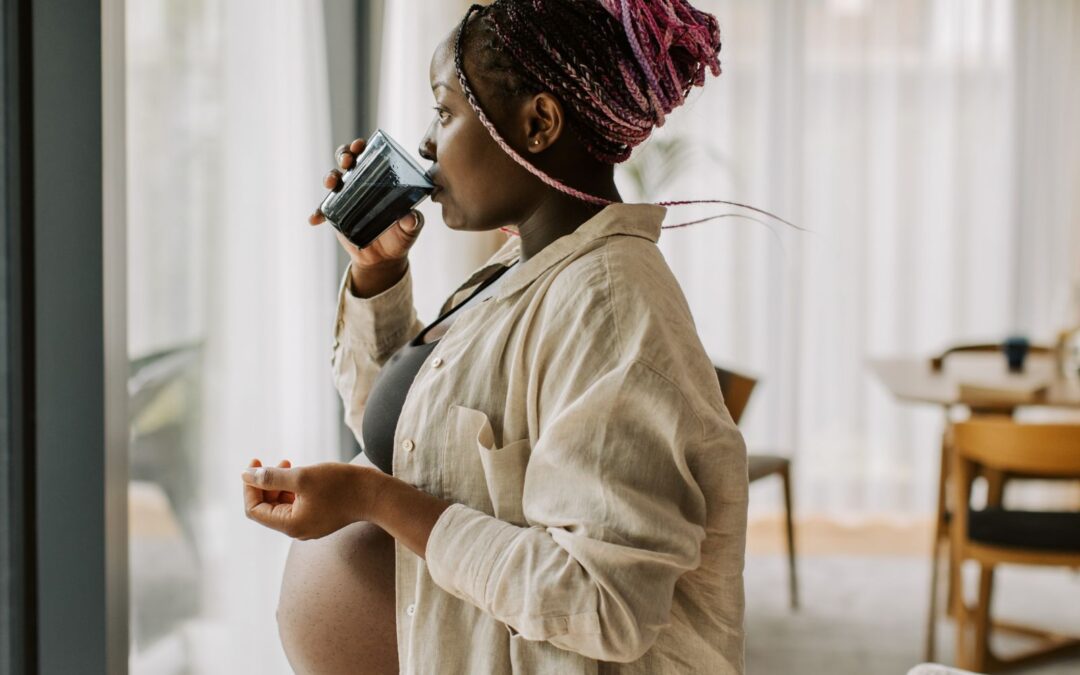
One of the most common questions women ask once they receive a positive pregnancy test is simple but important: How do I stay healthy during pregnancy?
The good news is that a healthy pregnancy doesn’t require perfection. It comes down to a handful of consistent habits that support both you and your growing baby. We’ve put together this guide of healthy pregnancy tips to help you feel confident and supported throughout your journey. Keep reading to learn more.
1. Take Prenatal Vitamins Regularly
Prenatal vitamins are one of the simplest and most effective ways to support a healthy pregnancy. While eating a balanced diet is important, it can be hard to get every nutrient from food alone. This is especially true in early weeks, when nausea or food aversions are common.
Prenatal vitamins typically contain higher levels of key nutrients than a standard multivitamin, including[1]:
- Folic acid — helps prevent neural tube defects, which affect the brain and spine of a developing baby. This is especially critical in the first few weeks of pregnancy, often before a woman even knows she’s pregnant.
- Iron — supports the increased blood volume in your body and helps prevent anemia, which can leave you feeling exhausted.
- Calcium and vitamin D — support your baby’s developing bones and teeth while helping protect your own bone density.
- DHA (an omega-3 fatty acid) — supports your baby’s brain and eye development.
If you’re not currently taking a prenatal vitamin, talk with your healthcare provider about starting one as soon as possible. If you experience nausea when taking vitamins, ask about taking them with food, splitting the dose throughout the day, or trying a different formulation, such as a gummy or chewable version.
2. Stay Active and Keep Exercising (With Your Doctor’s Guidance)
Exercise during pregnancy offers real benefits for your body, your mood, and even your labor and delivery experience. Staying active during pregnancy can help[2]:
- Improve posture as your body changes
- Boost energy levels and improve sleep quality
- Reduce the risk of gestational diabetes
- Support healthy weight gain
- Lower the risk of gestational diabetes
- Improve mood and reduce stress or anxiety
- Prepare your body for labor and speed up postpartum recovery
For most women with low-risk, healthy pregnancies, moderate exercise is not only safe but encouraged. Activities like walking, swimming, pilates, yoga (excluding hot yoga), and light strength training are generally considered good options throughout pregnancy.[3][4]
That said, every pregnancy is different, and the right amount and type of activity depends on your individual health history. Always talk to your doctor about how much activity is right for you and which types of exercise are safe for your specific situation — especially if you have a high-risk pregnancy, a history of preterm labor, other medical conditions, or if you are simply unsure about what is safe for you during your pregnancy.[3]
3. Avoid Vaping, Smoking, Drugs, and Alcohol
There is no known safe amount of alcohol, tobacco, or recreational drug use during pregnancy. Substances you use can pass directly to your baby through the placenta, and the effects can range from developmental delays to more serious, lifelong complications.
Here’s a closer look at why avoiding these substances matters so much:
- Smoking and vaping — Nicotine restricts blood flow to the placenta, limiting the oxygen and nutrients your baby receives.[5] Smoking during pregnancy is linked to low birth weight, premature birth, and sudden infant death syndrome (SIDS).[6] Vaping is not a safe alternative. It still exposes your baby to nicotine and other chemicals.
- Alcohol — Drinking during pregnancy can cause fetal alcohol spectrum disorders (FASDs), which may lead to lifelong physical, behavioral, and intellectual disabilities. Because there is no established “safe” amount, healthcare providers recommend avoiding alcohol entirely during pregnancy.[7]
- Drugs — Both illegal drugs and the misuse of prescription medications can cause serious harm, including birth defects, withdrawal symptoms in the baby after birth, and long-term developmental issues.[8]
If you’re struggling to quit smoking, drinking, or using drugs, please know that you are not alone, and support is available. Talk to your healthcare provider honestly about any substance use. They are there to help you and your baby, not to judge you. NorthState Care Clinic can also connect you with local resources and referrals if you need extra support along the way.
4. Drink Enough Water
Pregnancy nutrition plays a foundational role in your baby’s growth and your own well-being. Your body is working hard to build a placenta, increase your blood volume, and support your baby’s rapidly developing organs, all of which require extra fluids and nutrients.
Staying hydrated is especially important during pregnancy. Generally, water helps support fetal circulation, amniotic fluid, and increased blood volume.[9] It also helps reduce the risks of[10]:
- Constipation
- Headaches
- Low amniotic fluid
- Reduced breast milk production
- Premature birth
Most pregnant women should aim for around 3 liters (or ~12 cups) of water a day[10], though your provider can give you a more specific recommendation based on your activity level and health needs.
5. Eat Healthy Meals
When it comes to healthy nutrition during pregnancy, focus on a balanced variety of foods, including[11]:
- Fruits and vegetables — packed with vitamins, minerals, and fiber
- Whole grains — such as oatmeal, brown rice, and whole-wheat bread, which provide energy and fiber
- Lean proteins — like poultry, beans, eggs, and well-cooked fish, which support your baby’s growth
- Dairy or calcium-rich alternatives — for strong bones and teeth
- Healthy fats — such as those found in avocados, nuts, and olive oil, which support brain development
It’s also worth knowing which foods to limit or avoid during pregnancy, including[12]:
- Raw or undercooked meat and eggs
- Unpasteurized dairy products
- Certain high-mercury fish (like shark, swordfish, and king mackerel)
- Deli meats or sausages, unless heated until steaming[13]
Your healthcare provider can give you a complete list tailored to your needs.
Cravings and food aversions are completely normal, and it’s okay to indulge occasionally. The goal isn’t perfection — it’s building habits that nourish you and your baby most of the time.
6. Get Enough Sleep
Sleep is often one of the first things to suffer during pregnancy, yet it’s one of the most important things your body needs. Growing a baby takes an enormous amount of energy, and quality sleep supports your immune system, emotional well-being, and physical recovery.
Most pregnant women need 7–9 hours of sleep per night[14], though many find that pregnancy makes restful sleep harder to come by — especially in the third trimester, when a growing belly, frequent bathroom trips, and backaches can all interfere with rest.
A few tips that may help you sleep better during pregnancy[15]:
- Sleep on your side, particularly your left side, which can improve blood flow to your baby (ask your provider for specific guidance based on your stage of pregnancy)
- Use pillows to support your belly, back, and knees
- Avoid caffeine in the afternoon and evening
- Establish a calming bedtime routine
- Limit screen time before bed
- Take short naps during the day if nighttime sleep is disrupted
If you’re dealing with ongoing insomnia, restless leg syndrome, or sleep apnea symptoms during pregnancy, mention this to your healthcare provider. There are often safe strategies that can help.
Free Pregnancy Services in Redding, California
Whether you’re just beginning your pregnancy journey or looking for extra support along the way, NorthState Care Clinic is here to help. We provide free services, including:
- Pregnancy Tests — If you think you might be pregnant, our lab-quality pregnancy tests can give you accurate, reliable results, along with compassionate support to help you understand your next steps.
- Limited OB Ultrasounds — Our ultrasound services can help confirm your pregnancy, estimate how far along you are, and check that your pregnancy is developing as expected — all in a caring, judgment-free environment.
- Referrals to Local Resources — Every pregnancy comes with its own set of needs. Our team can connect you with trusted local resources for things like healthcare providers, housing assistance, health insurance, and other community support services to help you have the healthiest pregnancy possible.
You don’t have to navigate pregnancy alone. Our caring staff is here to support you with the information and resources you need, every step of the way.
Ready to get started? Call us today at 530-246-7075 or schedule your appointment online to take the next step toward a healthy pregnancy.
*Important Note: This article is for educational purposes only. It does not replace medical advice or treatment. Pregnant women should always consult with their healthcare providers to make safe, informed choices for themselves and their pregnancies.
Sources
- Cleveland Clinic. (2024, September 26). Prenatal Vitamins. https://my.clevelandclinic.org/health/drugs/9754-pregnancy-prenatal-vitamins
- Mayo Clinic. (2021, April 29). Exercise During Pregnancy: Safe, Beneficial. https://www.mayoclinichealthsystem.org/hometown-health/speaking-of-health/exercise-during-pregnancy
- Johns Hopkins Medicine. (n.d.). Exercise During Pregnancy. https://www.hopkinsmedicine.org/health/wellness-and-prevention/exercise-during-pregnancy
- Redondo-Delgado, P., Blanco-Giménez, P., López-Ortiz, S., García-Chico, C., Vicente-Mampel, J., & Maroto-Izquierdo, S. (2025, April 14). Effects of strength training on quality of life in pregnant women: A systematic review. U.S. National Library of Medicine. https://pmc.ncbi.nlm.nih.gov/articles/PMC12144601/
- Pintican, D., Poienar, A. A., Strilciuc, S., & Mihu, D. (2019, July). Effects of maternal smoking on human placental vascularization: A systematic review. ScienceDirect. https://www.sciencedirect.com/science/article/pii/S1028455919301081
- Centers for Disease Control and Prevention. (2023, October 13). Smoking, Pregnancy, and Babies. https://www.cdc.gov/tobacco/campaign/tips/diseases/pregnancy.html
- Mayo Clinic. (2024, June 13). Fetal Alcohol Syndrome. https://www.mayoclinic.org/diseases-conditions/fetal-alcohol-syndrome/symptoms-causes/syc-20352901
- March of Dimes. (2024, December). Street drugs and pregnancy. https://www.marchofdimes.org/find-support/topics/pregnancy/street-drugs-and-pregnancy
- Montgomery, K. S. (2002). Nutrition column an update on water needs during pregnancy and beyond. U.S. National Library of Medicine. https://pmc.ncbi.nlm.nih.gov/articles/PMC1595116/
- Pauley, A. M., Rosinger, A. Y., Savage, J. S., Conroy, D. E., & Downs, D. S. (2024, May 7). Every sip counts: Understanding hydration behaviors and user-acceptability of digital tools to promote adequate intake during early and late pregnancy. U.S. National Library of Medicine. https://pmc.ncbi.nlm.nih.gov/articles/PMC11075850/
- Johns Hopkins Medicine. (n.d.). Nutrition During Pregnancy. https://www.hopkinsmedicine.org/health/wellness-and-prevention/nutrition-during-pregnancy
- Mayo Clinic. (2023, November 30). Pregnancy nutrition: Foods to avoid during pregnancy. https://www.mayoclinic.org/healthy-lifestyle/pregnancy-week-by-week/in-depth/pregnancy-nutrition/art-20043844
- Centers for Disease Control and Prevention. (2025, January 31). Safer Food Choices for Pregnant Women. https://www.cdc.gov/food-safety/foods/pregnant-women.html
- Wang, R., Xu, M., Yang, W., Xie, G., Yang, L., Shang, L., Zhang, B., Guo, L., Yue, J., Zeng, L., & Chung, M. C. (2022, March 8). Maternal sleep during pregnancy and adverse pregnancy outcomes: A systematic review and meta-analysis. U.S. National Library of Medicine. https://pmc.ncbi.nlm.nih.gov/articles/PMC9248434/
- Cleveland Clinic. (2024, January 3). Pregnancy Insomnia. https://my.clevelandclinic.org/health/diseases/pregnancy-insomnia
*Important Note: This article is for educational purposes only. It does not replace medical advice or treatment. Pregnant women should always consult with their healthcare providers to make safe, informed choices for themselves and their pregnancies.
Sources
-
-
-
- Cleveland Clinic. (2024, September 26). Prenatal Vitamins. https://my.clevelandclinic.org/health/drugs/9754-pregnancy-prenatal-vitamins
- Mayo Clinic. (2021, April 29). Exercise During Pregnancy: Safe, Beneficial. https://www.mayoclinichealthsystem.org/hometown-health/speaking-of-health/exercise-during-pregnancy
- Johns Hopkins Medicine. (n.d.). Exercise During Pregnancy. https://www.hopkinsmedicine.org/health/wellness-and-prevention/exercise-during-pregnancy
- Redondo-Delgado, P., Blanco-Giménez, P., López-Ortiz, S., García-Chico, C., Vicente-Mampel, J., & Maroto-Izquierdo, S. (2025, April 14). Effects of strength training on quality of life in pregnant women: A systematic review. U.S. National Library of Medicine. https://pmc.ncbi.nlm.nih.gov/articles/PMC12144601/
- Pintican, D., Poienar, A. A., Strilciuc, S., & Mihu, D. (2019, July). Effects of maternal smoking on human placental vascularization: A systematic review. ScienceDirect. https://www.sciencedirect.com/science/article/pii/S1028455919301081
- Centers for Disease Control and Prevention. (2023, October 13). Smoking, Pregnancy, and Babies. https://www.cdc.gov/tobacco/campaign/tips/diseases/pregnancy.html
- Mayo Clinic. (2024, June 13). Fetal Alcohol Syndrome. https://www.mayoclinic.org/diseases-conditions/fetal-alcohol-syndrome/symptoms-causes/syc-20352901
- March of Dimes. (2024, December). Street drugs and pregnancy. https://www.marchofdimes.org/find-support/topics/pregnancy/street-drugs-and-pregnancy
- Montgomery, K. S. (2002). Nutrition column an update on water needs during pregnancy and beyond. U.S. National Library of Medicine. https://pmc.ncbi.nlm.nih.gov/articles/PMC1595116/
- Pauley, A. M., Rosinger, A. Y., Savage, J. S., Conroy, D. E., & Downs, D. S. (2024, May 7). Every sip counts: Understanding hydration behaviors and user-acceptability of digital tools to promote adequate intake during early and late pregnancy. U.S. National Library of Medicine. https://pmc.ncbi.nlm.nih.gov/articles/PMC11075850/
- Johns Hopkins Medicine. (n.d.). Nutrition During Pregnancy. https://www.hopkinsmedicine.org/health/wellness-and-prevention/nutrition-during-pregnancy
- Mayo Clinic. (2023, November 30). Pregnancy nutrition: Foods to avoid during pregnancy. https://www.mayoclinic.org/healthy-lifestyle/pregnancy-week-by-week/in-depth/pregnancy-nutrition/art-20043844
- Centers for Disease Control and Prevention. (2025, January 31). Safer Food Choices for Pregnant Women. https://www.cdc.gov/food-safety/foods/pregnant-women.html
- Wang, R., Xu, M., Yang, W., Xie, G., Yang, L., Shang, L., Zhang, B., Guo, L., Yue, J., Zeng, L., & Chung, M. C. (2022, March 8). Maternal sleep during pregnancy and adverse pregnancy outcomes: A systematic review and meta-analysis. U.S. National Library of Medicine. https://pmc.ncbi.nlm.nih.gov/articles/PMC9248434/
- Cleveland Clinic. (2024, January 3). Pregnancy Insomnia. https://my.clevelandclinic.org/health/diseases/pregnancy-insomnia
-
-